
How it works
The 10Hertz platform eliminates the biggest problem of modern turntables, i.e. their inability to effectively suppress low frequencies.
Operating principle — vibration isolation from 10 Hz
The 10Hertz platform eliminates the biggest problem of modern turntables, i.e. their inability to effectively suppress low frequencies. The low weight of such devices makes it impossible to suppress acoustic vibrations, which makes it difficult to achieve the richness that music on a well-recorded vinyl disc can achieve. The 10Hertz platform uses a system of soft, polymer-based vibrating elements, which jointly suppress sound-degrading frequencies starting at 10 Hertz. Patent Protection P.439273
How does an anti-vibration platform damp floor and furniture vibrations?
The mass and construction of the platform shift the system’s resonance to around 10 Hz, where the cartridge–tonearm system is least sensitive — a range that cannot be reached with a turntable stand alone.
Have similar solutions been used before in turntable design? Yes — floating platters and sub-chassis suspensions, known among others from Thorens turntables, rely on the same principle of mechanically separating the platter from the base, only implemented inside the housing instead of beneath it.
Why exactly 10 Hz
The turntable is a mechanical device and hence the reduction of extremely low frequencies is crucial for the sound quality of the music being played.
Shure engineers state in their studies that within a high-quality and properly calibrated turntable, the resonance of the cartridge and the tonearm should fall exactly in the 10 Hz range so as to ensure the best possible music perception. The manufacturers of the tonearms consider the 8 to 12 Hz range to be of vital importance for this circuit.
Therefore, it becomes necessary to isolate the turntable from such vibrations. Where do they come from?
They are caused by the resonances of the loudspeaker housing, the floor and furniture, which resonate particularly strongly in the range from 5 to 15 Hz and such vibrations are then transferred to the turntable chassis and then to the record. This is especially true in the case of lightweight turntables. Those manufactured today weigh between 6 and 10 kg and are not able to absorb the frequencies which are most harmful for a turntable, from 10 to 100 Hz.
That is the reason, why the 10 Hertz platform was created. Professional vibroacoustic research has demonstrated the effectiveness of the solutions used in 10 Hertz platforms. Consumer tests and professional reviews have confirmed that the changes in sound are spectacular. To the Better.
In order to achieve the most spectacular sound improvements, the 10 Hertz platforms are precisely trimmed, matched to the weight of a specific turntable.
A turntable is a mechanical device, and sound quality depends not only on the cartridge and tonearm but on the environment in which they work. The floor, furniture and loudspeaker cabinets generate vibrations in the 5–15 Hz range — exactly where the cartridge–tonearm system is most sensitive. Ortofon and Shure engineers agree: the optimal resonance of the cartridge–tonearm system should fall around 10 Hz.
Has the influence of 10 Hz vibrations on turntable sound been scientifically studied? Yes — Ortofon and Shure engineers agree that the optimal resonance of the cartridge–tonearm system should fall around 10 Hz, and a professional vibroacoustic study confirmed the effectiveness of 10Hertz platforms in the critical 8–20 Hz range.
Floor, furniture and vibrations
On which floor does IsoHertz V work best
The effect is determined by the construction of the floor, not by the material on its surface.
- Wooden ceiling, joists, boards, parquet, panels: here the pads give the greatest effect. They cut the loudspeaker off from the floor, which would otherwise resonate together with it.
- Stone or tiles on a wooden ceiling (e.g. in a tenement house): pads are a better choice than spikes.
- Massive concrete or stone on the ground: the floor hardly vibrates, so the difference is smaller. Spikes also work well here.
Does IsoHertz replace spikes?
It is a different solution. Spikes create a rigid support, whereas IsoHertz uses an elastic system matched to the mass of the loudspeaker.
IsoHertz V3 works both ways — it limits both the transmission of mechanical energy from the loudspeaker to the floor, furniture or stand, and of floor vibrations towards the loudspeaker. This very way of operating of the elastic system is the basis of the IsoHertz V design.
WOJTEK’S NOTE ClearAudio is a high-class and beautiful turntable, but very stiff and hard. Like a car that has no springs at all. It transmits not only every tremor from the floor but reacts to every sound wave that reaches the tonearm and vibrates in a different phase than the tonearm.
Measurements and research
Chart data
| Frequency | Isolation |
|---|---|
| 4 Hz | 4,1 dB / -60% |
| 5 Hz | 7,3 dB / -131% |
| 6,3 Hz | 12,3 dB / -313% |
| 6,4 Hz | 12,3 dB / -312% |
| 8 Hz | 4,3 dB / -64% |
| 10 Hz | -2,9 dB / 29% |
| 12,5 Hz | -8,4 dB / 62% |
| 16 Hz | -13,5 dB / 79% |
| 20 Hz | -17,7 dB / 87% |
| 25 Hz | -21,5 dB / 92% |
| 31,5 Hz | -25,3 dB / 95% |
| 40 Hz | -28,9 dB / 96% |
| 50 Hz | -32,2 dB / 98% |
| 63 Hz | -35,4 dB / 98% |
| 80 Hz | -38,6 dB / 99% |
| 100 Hz | -41,5 dB / 99% |
| 125 Hz | -44,3 dB / 99% |
| 160 Hz | -47,3 dB / 100% |
| 200 Hz | -50 dB / 100% |
Source vinylspot.pl
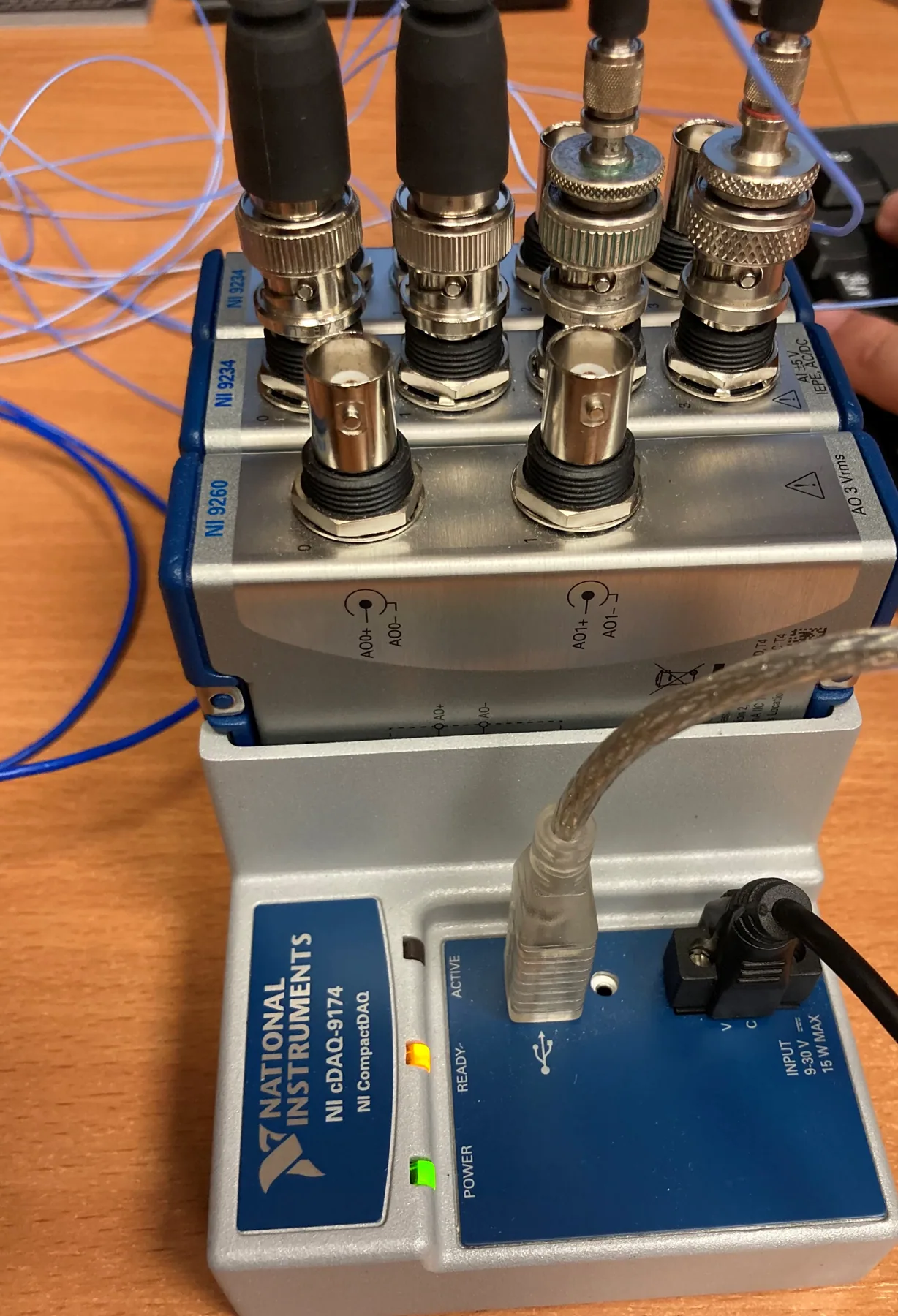
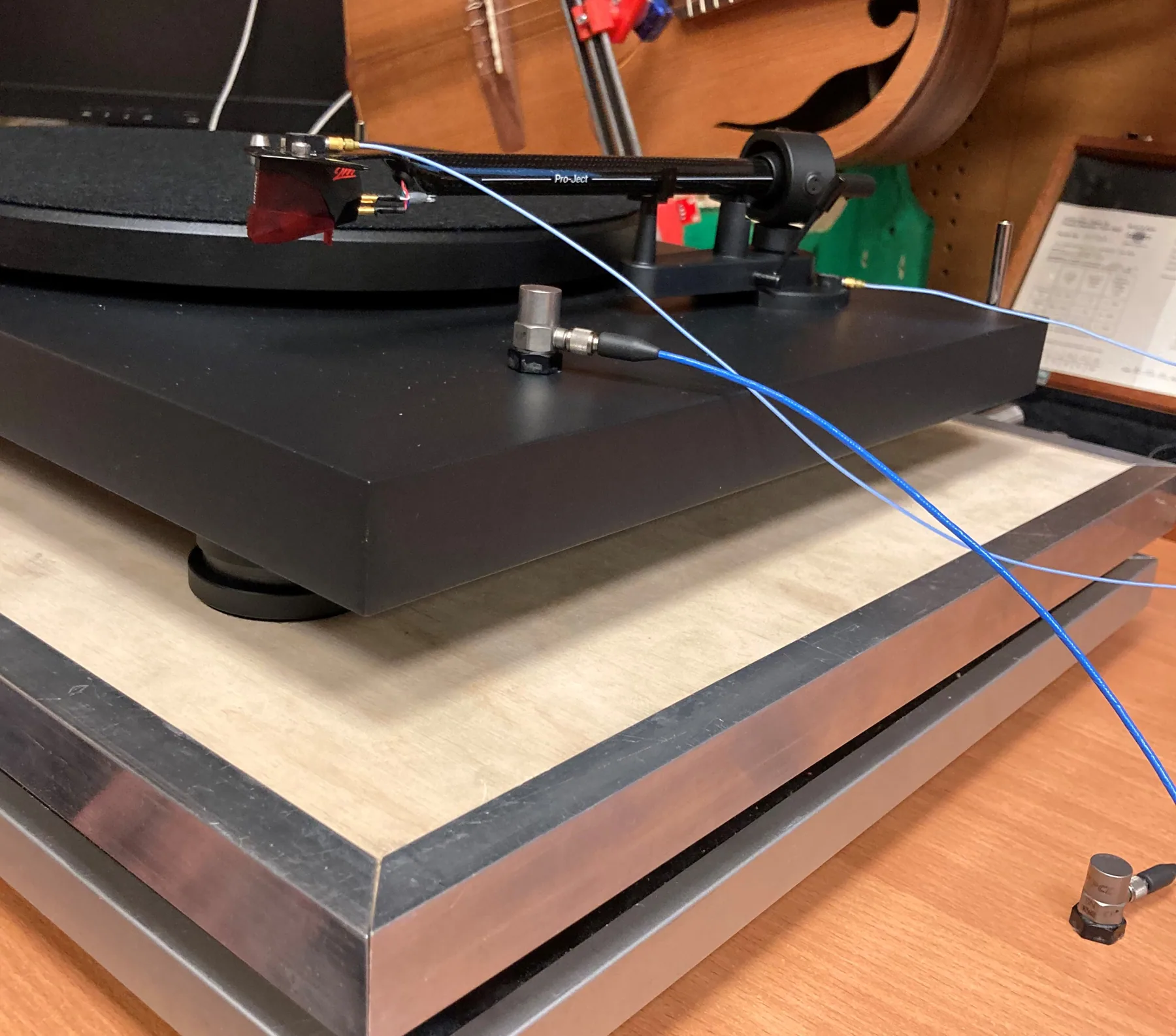
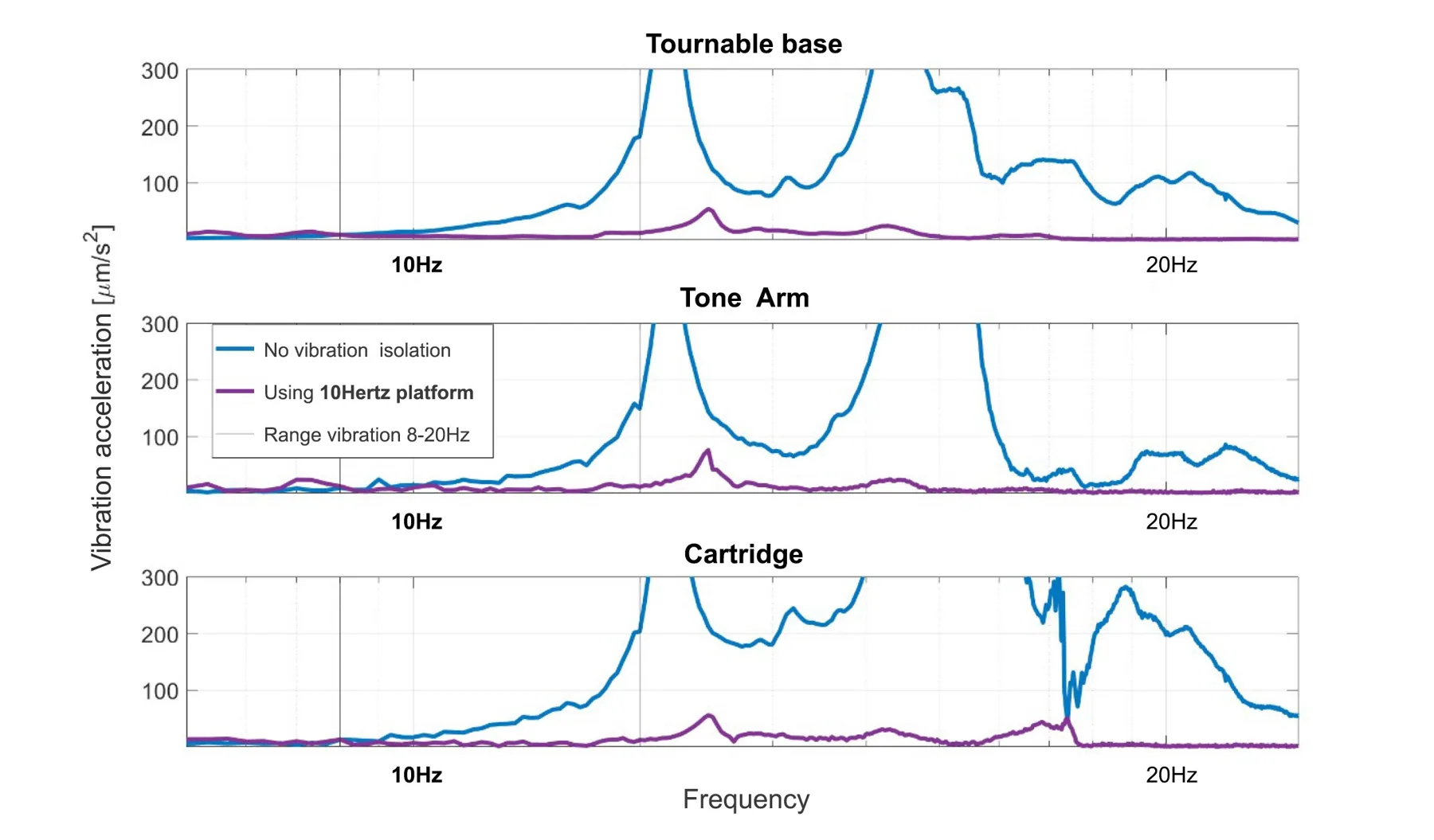
In order to verify the objective quality of the presented device, the so-called Pulse Method was used. The acceleration of vibrations on key elements of the turntable was measured: before and after mounting the turntable on our anti-vibration platform.
The test was conducted by Mr. Bartłomiej Chojnacki, an expert in vibroacoustics.
The graphs below show how significant a reduction of vibrations is achieved by the 10Hertz platform, especially within the range of frequencies spanning 8-20 Hz, a range which is critical for the proper operation of a turntable.